

Ryan Zavodnick | October 17, 2026 | Truck Accidents

What happens after a truck accident claim is filed in Philadelphia?
The first weeks go to preserving the carrier’s records and documenting the injuries, not to negotiating. A demand follows once treatment stabilizes, and a lawsuit follows if the carrier’s insurer will not pay what the claim is worth. Timelines vary with the severity of the injuries and how many companies are involved, so a lawyer can give you a realistic range once the file is open.
Truck claims run on a different schedule than car claims, and the reason is evidence. The carrier’s investigator is often working the crash within hours, and the records that show what the driver had been doing for the previous three days sit on a retention clock. What happens in the first month tends to decide what is available in the twelfth.
The first thirty days
Preservation demands go out
Written notice to the motor carrier, the equipment owner and anyone else in the chain, demanding that hours-of-service data, engine control module downloads, dashcam and telematics files, dispatch records, the driver qualification file and maintenance history be retained. Federal rules require carriers to keep duty status records and supporting documents for six months, and video systems overwrite on far shorter cycles.
The crash is reconstructed while it is fresh
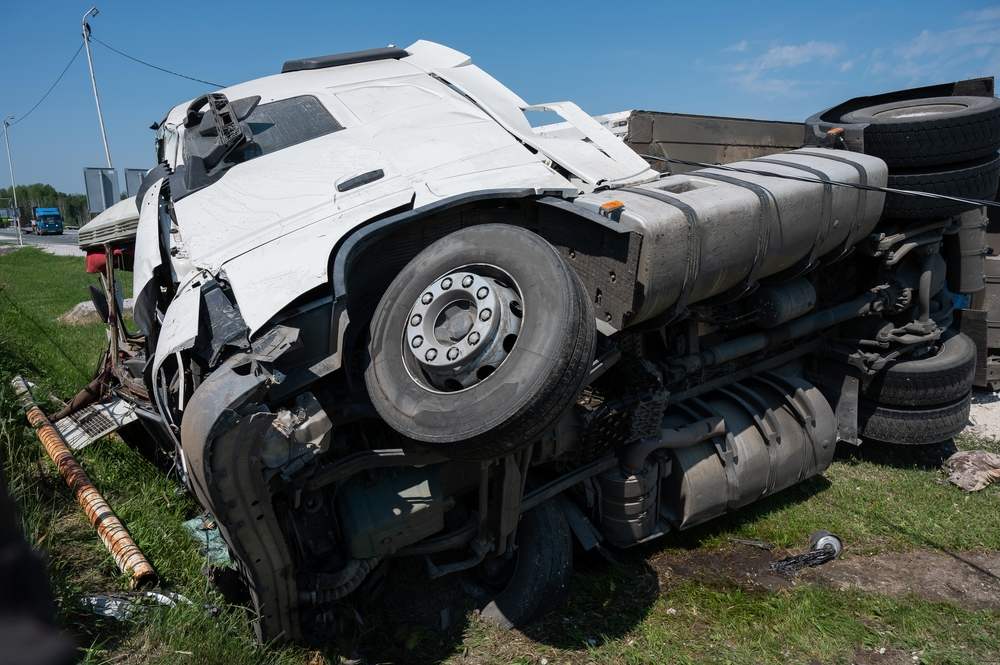
Scene photographs, the police crash report, roadway measurements, and video from businesses along the route. Where the vehicles are still available, an inspection can capture damage patterns and equipment condition before repairs erase them.
Treatment is documented from the start
The medical file is the other half of the case. Getting evaluated promptly, telling the provider the crash caused it, and following the treatment plan builds the record that the carrier’s insurer will eventually have to answer.
Building the claim
Identifying everyone who may be responsible
The driver, the motor carrier, a shipper or loading company, a maintenance contractor, an equipment owner, sometimes a broker. Each may carry separate insurance, and under 49 CFR Part 387 an interstate carrier hauling ordinary freight must hold at least $750,000 in liability coverage, which matters when injuries exceed a single policy. Company pages like our FedEx and UPS truck accident pages cover how these arrangements work with specific carriers.
Waiting for the medical picture to stabilize
Claims are valued on where the injury lands, not on where it started. A demand sent before a treating physician can describe permanence and future care is a demand that leaves money in the file.
The demand package
Records, bills, wage documentation, a liability analysis with the federal regulations that apply, and a statement of what the injury has cost. The carrier’s insurer responds, sometimes with an offer, sometimes with a denial, sometimes with silence that functions as a denial.
If the case has to be filed
Suit and discovery
The complaint is filed, usually in the Philadelphia County Court of Common Pleas for a crash that happened here. Discovery is where truck cases separate from car cases: the driver’s file, the carrier’s safety history, prior violations, dispatch communications and the data downloads all come into play.
Depositions and retained witnesses
The driver, the safety director and the dispatcher testify. Reconstruction, trucking safety and medical witnesses are retained on both sides. Most cases resolve during or after this phase, often at mediation, with a smaller number reaching trial.
Questions clients ask about timing
How long do I have to file a truck accident lawsuit in Pennsylvania?
Two years from the crash for most injury claims. Claims against a government entity carry shorter notice requirements, which is a reason to get advice early rather than near the deadline.
Why can’t we just settle now?
Because an offer made before your treatment stabilizes is priced on an incomplete medical record, and a settlement is final. The exception is a case where liability is clear and the injuries have resolved, which moves faster.
Does the carrier’s insurer have to talk to my lawyer instead of me?
Once you are represented, yes, contact runs through counsel. That change alone ends the recorded statement requests that start arriving in the first week.
What evidence disappears first in a truck case?
Video, which can overwrite within days, followed by engine and telematics data and the carrier’s duty status records, which federal rules require be kept only six months. A written preservation demand is what stops that routine deletion.
Can more than one company be responsible for the same crash?
Yes, and that is common. The driver, the motor carrier, the company that loaded the trailer, a maintenance contractor and sometimes a freight broker can each carry responsibility and separate insurance.
Get the clock working for you instead of against you

Every week that passes without a preservation letter is a week the carrier’s routine retention schedule keeps running. That is the part of the process that cannot be recovered later.
Zavodnick & Lasky Personal Injury Lawyers handle Philadelphia truck claims on a contingency basis, so the fee comes out of what is recovered. Call (215) 875-7030, or start with our Philadelphia truck accident page for how these cases are built.
