

A commercial truck leaves a paper trail that a car does not. Hours-of-service logs, engine data, inspection records, driver qualification files. Most of it can be lawfully deleted on a normal retention schedule, and most of it is gone before an injured person thinks to ask for it.
Zavodnick & Lasky Personal Injury Lawyers handles truck accident claims in Philadelphia. If you were hit by a commercial vehicle, the useful call is an early one. +1 (215) 875-7030.
What Makes a Truck Case Different From a Car Case?
Federal regulation, and the number of companies involved.
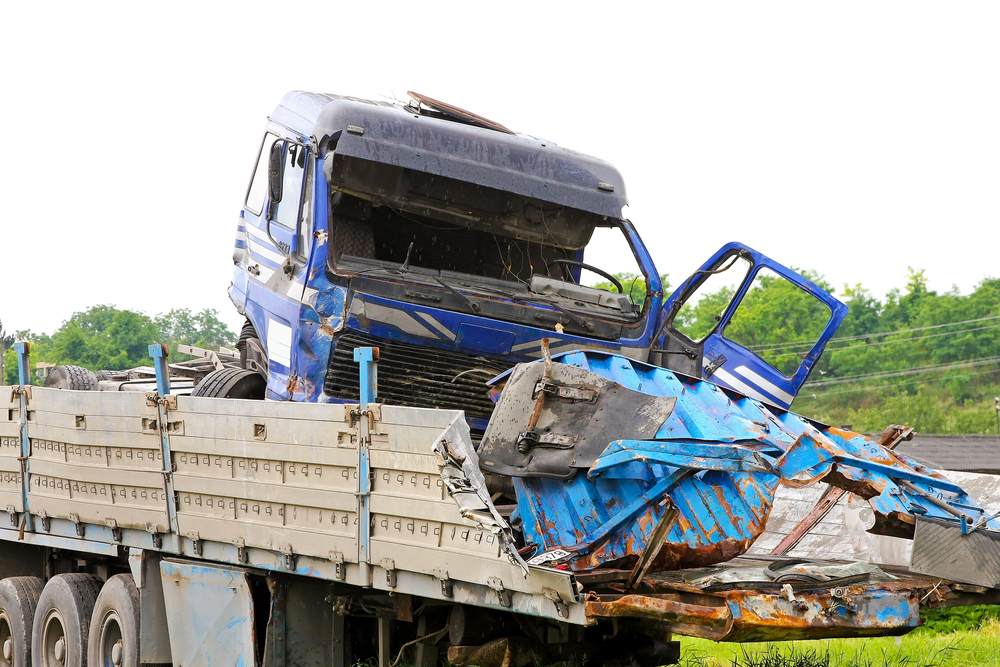
Interstate carriers operate under rules issued by the Federal Motor Carrier Safety Administration, covering driver hours, vehicle inspection and maintenance, driver qualification, and cargo securement. When one of those rules was broken, that is evidence of negligence you do not have to construct from scratch.
The records that matter:
Hours of service and electronic logging data. Federal hours of service rules limit driving time and require rest. Electronic logging devices record it. Fatigue is one of the most common causes of serious truck crashes and one of the most provable, because the device does not misremember.
The engine control module. The truck’s onboard computer captures speed, braking, throttle and fault codes in the seconds before impact.
Driver qualification and drug testing files. Carriers are required to maintain them. Gaps in those files are their own problem for the carrier.
Maintenance and inspection records. Brake, tire and coupling failures usually have a documented history behind them.
Almost none of this is in the police report. A written preservation demand sent to the carrier in the first days after a crash is the single most consequential step in a truck case.
How Will a Truck Accident Lawyer Help?
By taking on the part that is genuinely difficult, which is not the injury claim. It is establishing which companies were involved and getting to their records before they age out.
Several parties are usually in play at once: the driver, the carrier, an insurer for each, and often a trailer owner, a shipper or a maintenance contractor. Each one has counsel from day one, and each one has a reason to point at the others.
As your lawyers, we will:
- Send preservation demands before logs, engine data and footage can be deleted
- Investigate the crash to identify every company that contributed
- Pull the carrier’s federal safety and inspection history
- Retain reconstruction and medical witnesses to establish cause and value
- Handle the carriers and litigate when the numbers do not move
- Push back when the defense tries to shift blame onto you
Call +1 (215) 875-7030 to start that process.
Who Can Be Held Responsible in a Truck Crash?
Usually more than one company, and identifying all of them changes what is available to pay a claim.
The driver. For the conduct itself.
The motor carrier. For the driver’s conduct within the scope of employment, and independently for hiring, training, supervision and dispatch pressure that made the crash likely.
The trailer owner or lessor. Tractors and trailers frequently belong to different companies operating under lease arrangements.
The shipper or loader. Improperly loaded or unsecured cargo shifts weight, lengthens stopping distance and causes rollovers.
The maintenance contractor. Outside shops that serviced brakes, tires or the fifth wheel.
Parts manufacturers. Failed components are product liability claims.
Freight brokers. In some circumstances, for placing a load with a carrier whose safety record should have disqualified it.
Other road users and government agencies. Another motorist, a transit vehicle, or a public body responsible for a road defect can share liability.
Interstate motor carriers are subject to federal minimum liability insurance requirements far above what a private driver carries, and each additional responsible company may bring its own policy. A carrier’s safety and inspection history is publicly searchable through FMCSA’s SAFER system, which is often the first thing worth checking after a serious crash.
Where Do Philadelphia Truck Crashes Happen?

Philadelphia sits on a freight corridor, which puts heavy trucks on roads that were not designed around them.
I-95 and the port district. Container and drayage traffic moving between the marine terminals and the interstate, on ramps with short merge distances.
The I-76 Schuylkill Expressway. Narrow lanes, no shoulder in long stretches, tight curves and constant congestion. A tractor-trailer has no room to recover here.
I-676 and the Vine Street Expressway. Traffic transitioning between highway and city speeds in a very short distance.
I-476 and the I-95 interchange. High-volume merging between two major freight routes.
Delivery routes on city streets. Box trucks and tractor-trailers making deliveries on streets with parked cars on both sides, backing into loading zones across sidewalks and bike lanes, with blind spots that swallow a cyclist entirely.
Roosevelt Boulevard. Multi-lane crossings, high speeds and a mix of local and through traffic, including trucks.
Our pages on FedEx truck accidents, UPS truck accidents, and our blog on truck blind spot accidents cover the delivery-fleet and no-zone crashes in more detail.
What Causes Truck Accidents in Pennsylvania?
The causes that recur in the cases we handle:
- Driver fatigue and hours-of-service violations
- Distraction and inattention
- Driving under the influence of alcohol or drugs
- Vehicle defects, particularly tire, brake and drivetrain failures
- Unsecured or improperly loaded cargo
- Overloaded trailers
- Speeding, including speed that was legal but unsafe for the conditions
- Failure to yield and unsafe turns
- Weather, traffic and road conditions
One thing worth understanding about these crashes: a loaded tractor-trailer traveling at highway speed needs roughly the length of a football field to stop, and that is under good conditions. Drivers of smaller vehicles routinely cut into that space without knowing it exists. That does not excuse a carrier’s violations, and it does not decide fault by itself, but it is the physical reality every one of these cases sits on top of.
Can You Recover If You Are Blamed for the Crash?

Yes, as long as your share of the fault is not greater than the other side’s. Pennsylvania applies modified comparative negligence: at 50% or less you recover, reduced by your percentage, and at 51% or more you recover nothing.
Expect to be blamed. Shifting fault onto the injured person is the standard defense in a truck case, because every point of fault moved onto you comes off the carrier’s bill. That is why the physical evidence, the engine data and the reconstruction matter more here than in an ordinary collision.
What Can You Recover After a Truck Crash?
Truck collisions produce a heavier injury profile than car crashes because of the weight differential. The claims we handle involve broken bones, burns, amputations, spinal cord damage, traumatic brain injury, soft tissue damage, back and neck injuries, and wrongful death.
Damages can include:
- Medical expenses, including future care
- Rehabilitation and nursing care
- Lost wages and lost earning capacity
- Property damage
- Pain and suffering
- Emotional distress
- Disfigurement
- Loss of enjoyment of life
- Disability
Because truck cases frequently reach several insurance policies at once, the practical ceiling on recovery is often much higher than in a car crash, and identifying every responsible company is what raises it, see our case results for examples..
How Long Do You Have to File a Truck Accident Lawsuit?
Generally two years from the date of the crash in Pennsylvania, and two years from the date of death in a wrongful death claim.
The legal deadline is not the operative one. Electronic logs, engine data and camera footage sit on retention schedules measured in weeks or months. By the time the two-year deadline is close, the evidence that would have proven the case is frequently gone.
If a commercial vehicle was involved in your crash, call +1 (215) 875-7030 now rather than after treatment finishes.
What to Ask Before the Carrier’s Investigator Calls Back
How soon do I need a lawyer after a truck accident?
Sooner than in a car case. Carriers dispatch their own investigators to serious crash scenes within hours, and electronic logs, engine data and dashcam footage sit on retention schedules that permit deletion. A preservation letter sent in the first week is what keeps that evidence available.
The trucking company’s representative already contacted me. Is that normal?
It is standard practice and it is not a courtesy. That representative works for the carrier’s insurer, and an early recorded statement or a quick payment for property damage is intended to shape the injury claim that follows. You are not required to speak with them.
What if the truck driver was an owner-operator, not an employee?
The carrier may still be responsible. Federal regulation treats a carrier operating under its own authority as responsible for vehicles in its service, and lease arrangements do not automatically insulate the company whose name is on the door. This is one of the first things worth investigating.
Are truck accident claims worth more than car accident claims?
Not automatically, though they often resolve for more for two structural reasons: the injuries tend to be more severe because of the weight differential, and the available insurance is usually far larger. Serious cases can also reach several policies at once when more than one company is responsible.
The Evidence Has a Shelf Life. The Deadline Does Not Help You.

Two years sounds like plenty of time. It is not, because the case is built out of records the other side controls and is permitted to delete.
Tell us what hit you, where, and what was written on the door. We will move on the records this week. Zavodnick & Lasky Personal Injury Lawyers, +1 (215) 875-7030.
Related reading: Philadelphia car accident lawyer for collisions not involving a commercial vehicle.
Reviewed by the motor vehicle team at Zavodnick & Lasky Personal Injury Lawyers, which handles commercial vehicle claims in Philadelphia County and the surrounding counties.
