

Getting hurt on a route puts your income, your treatment and sometimes your job in question at the same time. Zavodnick & Lasky Personal Injury Lawyers represent delivery drivers hurt on the job throughout Philadelphia.
A delivery driver hurt in a crash on the job in Pennsylvania usually has two claims, not one. Workers’ compensation covers the medical treatment and part of the lost wages no matter who caused it. A separate claim against the driver who hit you, or against whoever else is responsible, covers what comp does not, including pain and suffering.
We handle both sides of that. If you are out of work after a route injury, call (215) 875-7030.
Can a delivery driver file a workers’ comp claim and a lawsuit?
Yes, and the two are separate proceedings that run at the same time. The comp claim goes against your employer’s insurer and does not require proving fault. The third-party claim goes against the at-fault driver, a property owner, or another company, and it covers categories comp never pays.
| Workers’ compensation | Third-party claim | |
| Fault | Not required | Must be proven |
| Medical bills | Covered | Covered |
| Lost wages | About two-thirds, up to a weekly cap | Full loss, including future earning capacity |
| Pain and suffering | Not available | Available |
| Who it runs against | Your employer’s insurer | The driver, company, or property owner at fault |
One catch matters: under Section 319 of the Pennsylvania Workers’ Compensation Act, the comp insurer has a lien on the third-party recovery, so the settlement has to be structured with that lien in mind. Handling the two claims separately, or settling the injury case without addressing the lien, is how drivers end up handing most of a recovery back.
Are you an employee or an independent contractor?
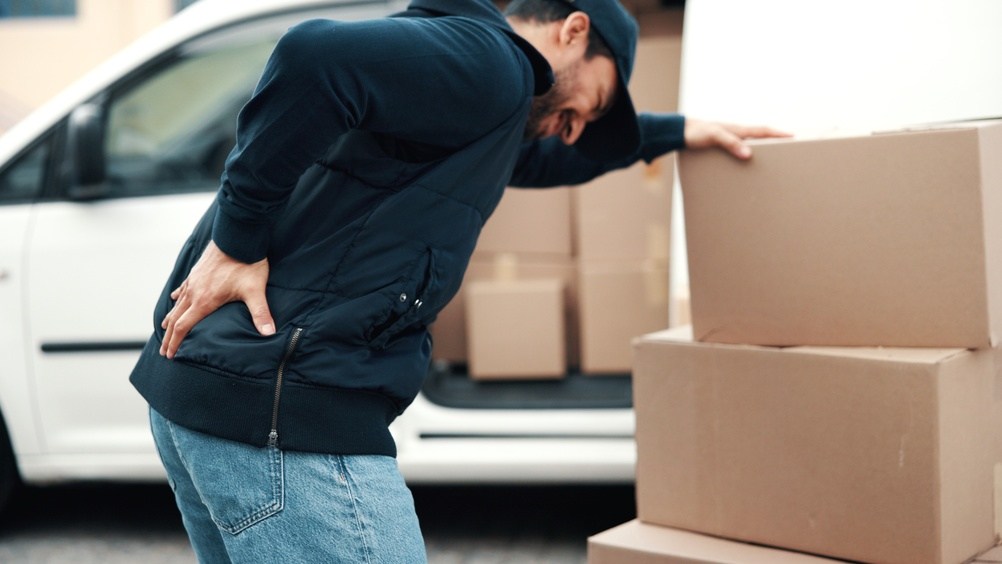
For a delivery driver, this question decides whether workers’ compensation exists at all. Pennsylvania employers must carry coverage for employees, and the state’s guidance for employers is blunt about that obligation. Contractors fall outside it.
Being handed a 1099 does not settle the question. What counts is the reality of the work: who controls your route and schedule, who owns the van, who supplies the scanner and the uniform, whether you can turn down assignments, and whether you can work for anyone else.
Drivers told they were contractors have been found to be employees on those facts, and drivers who assumed they had no claim have turned out to have one.
The structures in this market break down roughly like this. Amazon routes run through Delivery Service Partners and Amazon Flex, so the employer of record is often a small contracting company rather than Amazon. FedEx delivers through contracted service providers who employ their own drivers. UPS drivers are generally direct employees. App-based grocery and restaurant delivery sits in the most contested territory of all.
If someone has told you that you are not covered, that is worth a second opinion before you accept it. Call (215) 875-7030.
The injuries that are not collisions

Route work hurts people in ways that have nothing to do with traffic, and these claims get reported late because the driver keeps working for another week to see if it settles down.
Loading and unloading produces most of them: lifting from a floor-level deck, carrying a heavy box up three marble steps in Society Hill, jumping down from a cargo area onto a curb.
Then there are the porch injuries. Ice on an unsalted walkway, a rotted step, a dog that comes around the side of the house. A dog bite on a route can support both a comp claim and a claim against the animal’s owner, which is the same two-claim structure described above.
Report any of these to your employer in writing the day it happens, even if you plan to finish the shift. Late reporting is the most common reason a legitimate route injury turns into a fight.
What we do on a delivery driver claim

The first calls out of this office go to the things that disappear. Dash and dashcam footage, telematics data showing speed and braking, the delivery app’s own time and location records, and the police report if there was a crash. We also ask for the contract or onboarding paperwork between you and whoever pays you, because that is where the classification argument starts.
On the comp side we check the description of injury on the paperwork against everything you are actually treating for, and we make sure the average weekly wage reflects overtime and peak-season pay rather than a slow week. On the third-party side, we look past the at-fault driver’s policy limits to any commercial coverage that might apply.
Questions delivery drivers ask after a work injury
I was hurt driving for Amazon Flex or DoorDash, do I have any claim?
Possibly more than one. Classification decides the comp claim and it turns on how the work is actually controlled, not on what the paperwork calls you. Even where comp is unavailable, a claim against the at-fault driver usually is, and your own auto coverage may come into play.
Does my employer’s insurance cover me if the crash was my fault?
Workers’ compensation does not ask who caused the crash. A driver at fault in a collision on a route can still receive medical coverage and wage-loss benefits, which is the trade-off at the center of the comp system.
What if I was hurt carrying a package, not driving?
It is the same claim. Injuries from lifting, carrying, climbing stairs, and stepping off a truck are work injuries like any other, and back and shoulder injuries from loading are among the most common ones on a route.
How soon do I have to tell my employer?
Tell them the day it happens, in writing. Pennsylvania gives you a limited window before compensation is affected, and waiting to see whether the pain resolves is what puts drivers on the wrong side of it.
Talk to a lawyer before you give a recorded statement

Two insurers usually call a hurt delivery driver in the first week: the employer’s comp carrier and the other driver’s auto insurer. They want different things, and what you tell one can be used in the other case.
Zavodnick & Lasky Personal Injury Lawyers take delivery driver cases throughout Philadelphia on a contingency basis, so the fee comes out of what is recovered. To talk through both sides of a route injury, call (215) 875-7030. Related reading: our Philadelphia workers’ compensation page, the page on who is exempt from workers’ comp coverage, and our Philadelphia truck accident page for crashes involving box trucks and tractor-trailers.
